
fruit-forward coffee
Coffee with fruity flavors and medium to high acidity levels.


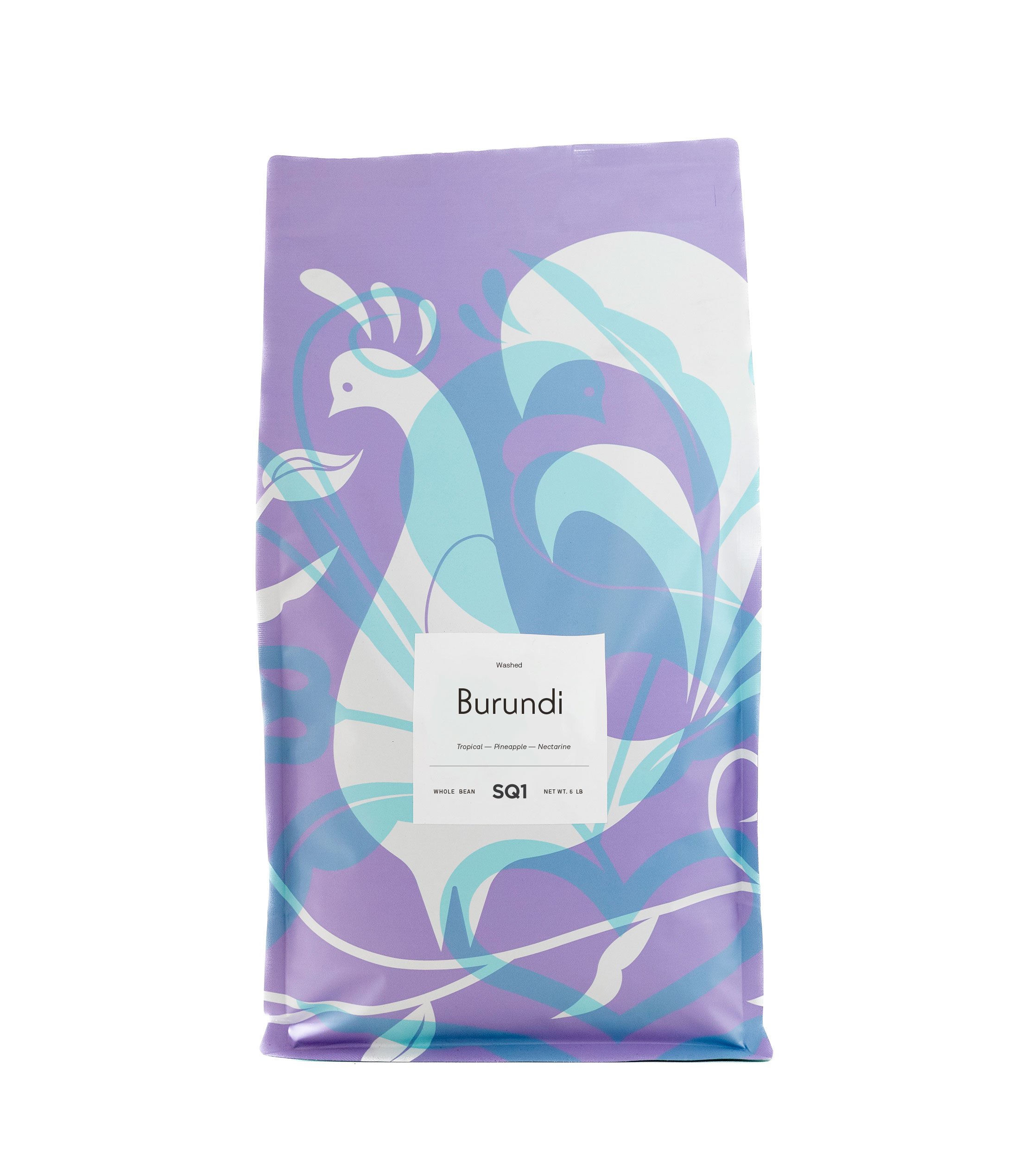

We taste: blood orange, cherry, tropical
Farmers: smallholders delivering to the Gakenke washing station
Region: Kayanza
Processing Method: Honey
Elevation: 1,650-1,950 msl
Variety: Bourbon
This coffee comes to us from the hills of Burundi, the heart of Africa. Gakenke Washing Station is located in the province of Kayanza and was established in 1991. Farmers here own less than half a hectare of land, on average, and in addition to growing coffee, they also grow crops like bananas, beans, yams, taro, and cassava, both for sale and for household use. There are 2,667 farmers that deliver to this washing station, each farmer holding only 250 trees on roughly a tenth of a hectare.
Due to the small size and yield on the average coffee farm or plot, washing stations are the primary point of purchase in Burundi. Unlike other coffee-growing regions in Central and South America where landholdings are slightly larger and coffee-centric resources are more available, most producers do not have space on their property or the financial means to do their wet- or dry-milling. Instead, the majority of growers deliver cherry to a facility that does sorting, blending, and post-harvest processing of day lots to create different offerings.
Instead of the traditional washed process, this coffee is a “honey” process. Honeys in Burundi are a rarity, but recently washing stations have been experimenting with this process, yielding tasty results. Ripe cherries are pulped, then immediately placed on raised beds for drying. Regular turning intervals create a honey process most similar to the classic Costa Rican honey process, producing flavors of subtle red fruits and noticeably elevated levels of sweetness in the cup.
When brewed, this coffee is complex and juicy with subtle nuances of blood orange and hints of cherry as it cools. It’s a delicious choice for any brewing method.
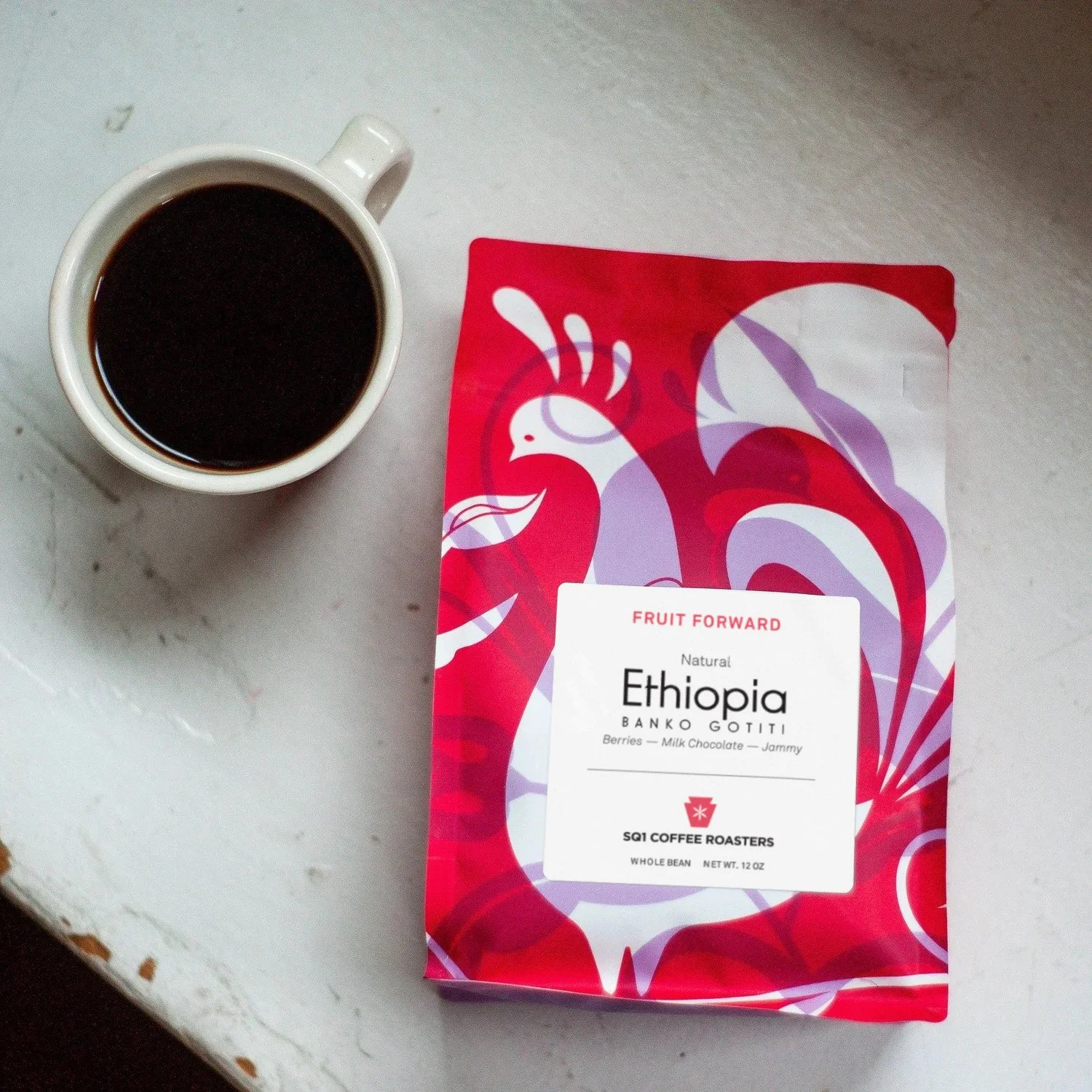



We taste: berries, milk chocolate, jammy
Wet Mill/Washing Station: Banko Gotiti
Region: Worka, Yirgacheffe
Processing Method: Natural (Grade 1)
Elevation: 1600-2300 msl
Variety: Ethiopian Heirloom Varieties
Banko Gotiti is a village in the Yirgacheffe ("Ir-ga-CHEF-ay") region in southern Ethiopia. The Banko Gotiti cooperative was founded in 2012 and has about 300 members who grow a mix of heirloom Ethiopian varieties of coffee.
Coffees in Ethiopia are typically grown on very small plots of land by farmers who also grow other crops. The majority of smallholders will deliver their coffee in cherry to a nearby washing station or central processing unit, where their coffee will be sorted, weighed, and paid for or given a receipt. Coffee is then processed, usually washed or natural, by the washing station and dried on raised beds. Typically farmers in this region don't have access to and therefore do not utilize fertilizers or pesticides in the production of coffee.
When brewed, this naturally processed coffee is juicy and sweet with hints of blueberry jam, milk chocolate, and ripe peach. As it cools, the coffee continues to sweeten as winey hints of raspberry emerge.
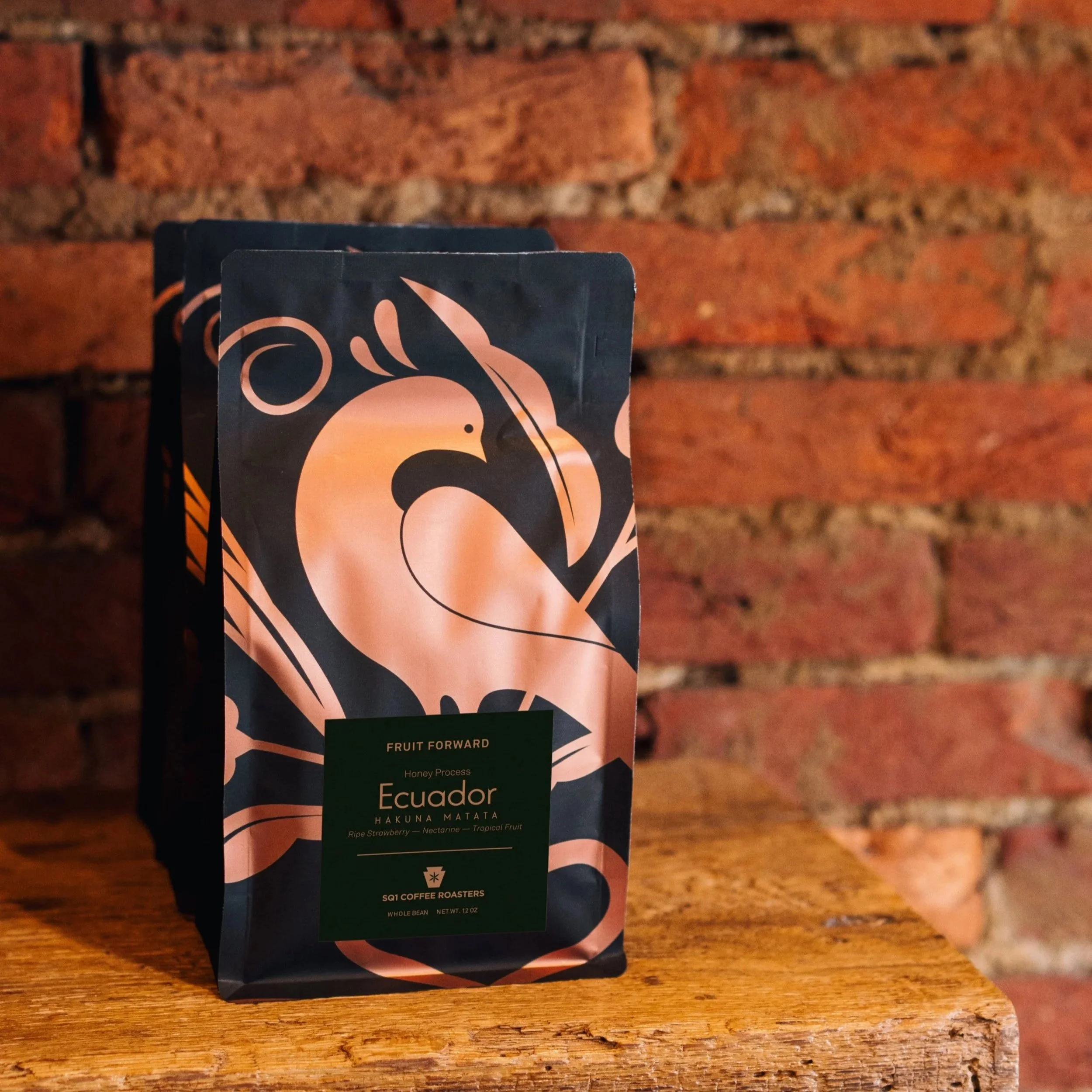

“Exceptional Coffee for the Adventurous Explorer”
We taste: ripe strawberry, nectarine, tropical fruit
Farm: Finca Hakuna Matata & Maputo owned by Henry and Verena Gaibor
Region: La Perla, Nanegal, Pichincha
Processing Method: Honey
Elevation: 1,350 msl
Variety: Typica
We’re excited to welcome back another staff and customer favorite from Finca Hakuna Matata (yes, that’s the name of the farm, like the song, which is Swahili for "no worries") and Finca Maputo, owned by Henry and Verena Gaibor. They also operate a micromill and control their own wet-milling and drying.
The couple has a very interesting, somewhat dramatic backstory, also having to do with medicine. They met in Bujumbura, Burundi, in 1996 when they were both volunteering for Doctors Without Borders: Henry is a veteran war-trauma surgeon from Ecuador, and Verena is a war nurse from Switzerland. They met in the field during a humanitarian crisis in Burundi. In 1998, the two of them returned to Henry's home country of Ecuador, where they managed a clinic in Quito for 13 years before deciding to devote their time, energy, and resources to another passion—coffee. Henry is extremely methodical and just as dedicated to his coffee production as he used to be about his medical profession, and Verena's management skills clearly show her training and efficiency as a nurse under extreme pressure.
Together, they are doing everything right when it comes to picking, processing, and drying coffees. The Gaibors grow several different varieties, which are clearly divided and marked on their properties: Typica, Bourbon, SL-28, Sidra, Kaffa, and Caturra.
Henry and Verena produce their coffee in La Perla, Nanegal, which is in the province of Pichincha, relatively close to the border of Colombia. Despite its relatively low altitude for Ecuador (1,350 meters above sea level), the area where the farm is located has a very specific microclimate with high humidity and mist covering over the coffee fields in the afternoons. Evenings become much cooler as well, and this unique combination of characteristics give the coffees from Finca Hakuna Matata a very special quality.
When brewed, this honey processed coffee is juicy and sweet with notes of ripe strawberry and nectarine. Hints of melon and tropical fruit emerge as it cools, and the coffee continues to sweeten, becoming straight up candy-like.
RECOMMENDED RECIPE via the SIMPLIFY Brewer:
15g finely ground coffee
230g hot water
Set a paper filter in SIMPLIFY the Brewer and rinse the filter (or not if you are lazy).
Pour water at the center of 15g fine ground coffee. (No circular motion!)
Pour 230g of water for 30 seconds.
Wait for 60 to 90 seconds until all the water drips from the brewer.
Serve and enjoy!
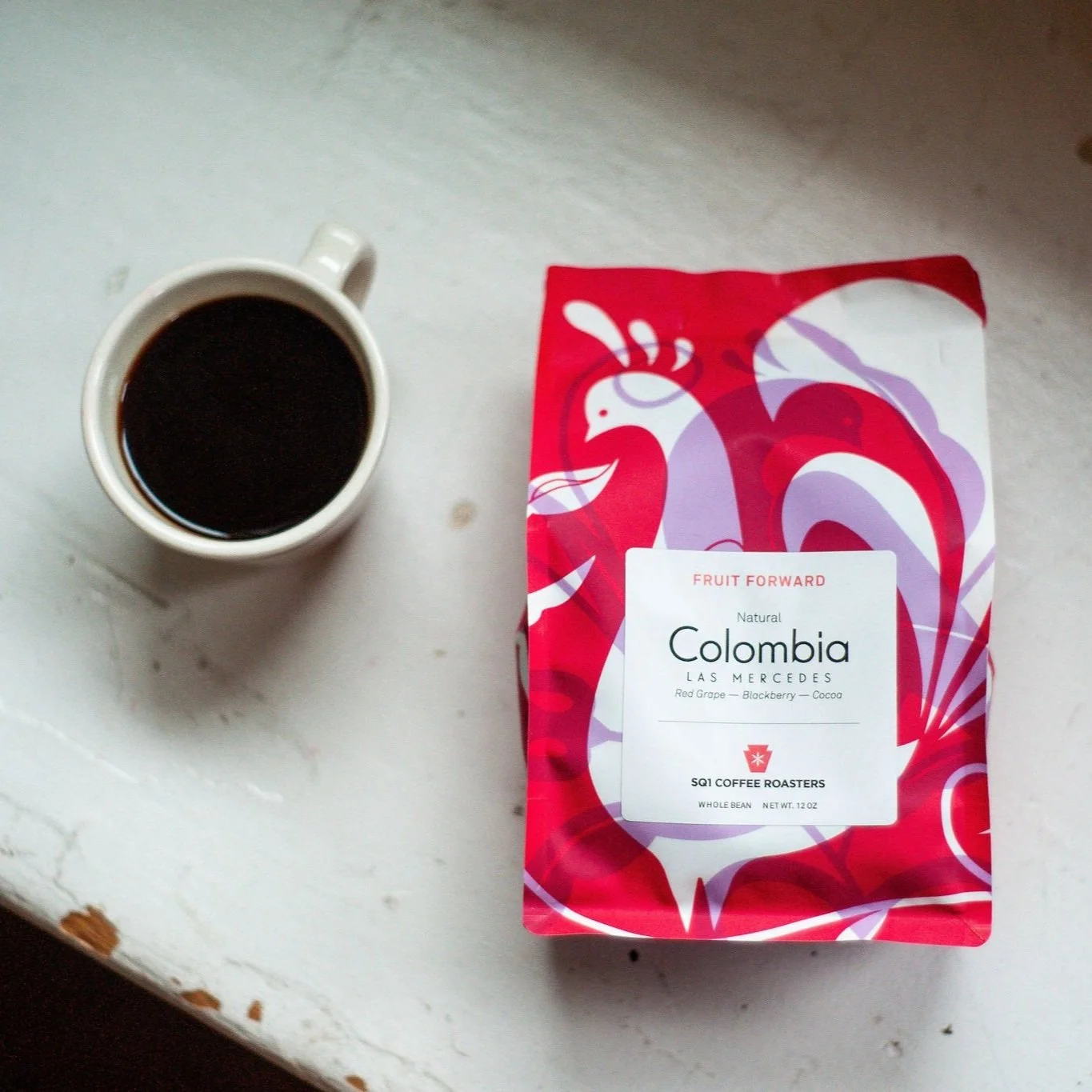

We taste: red grape, blackberry, cocoa
Farm: Las Mercedes owned by Alfonso Guerra
Region: Antioquia
Processing: Method: Natural
Elevation: 1,800 msl
Varieties: Caturra
Located near one of the tallest mountains in Antioquia, Finca Las Mercedes has the perfect altitude and climate for producing excellent quality coffee as well as playing host to a diversity of native flora and fauna. In this ideally situated terrain, the Guerra family have dedicated 150 of their 386 hectares to coffee. The rest of the farm lies under native forest – some 236 hectares devoted entirely as nature and a watershed preserve.
In 1960, when Eduardo Guerra Sánchez bought Las Mercedes, the Finca was devoted entirely to dairy production. Don Eduardo’s background was coffee farming, however, and upon gaining control of the farm, he decided to give some small parcels of land over to coffee. Despite the family heritage, the farm continued to produce primarily milk until Don Eduardo’s son, Alfonso Guerra Velez, took control of the farm some 20 years later.
In the first few years alone, Don Alfonso planted 150,000 coffee trees on the farm, and since this time, the principal economic focus of the Guerra family has turned to coffee farming. Don Alfonso’s son, Juan Carlos Guerra, will be the fourth generation in his family to farm coffee and is now actively involved in the activities of the farm. Under his influence, the farm has increasingly focused on quality improvements and speciality coffee production.
When brewed, this naturally processed coffee is fruity with notes of red grapes and blackberries and cranberry along with base notes of chocolate and toffee.as. It’s sweet and creamy on its own but holds up well to milk and sugar.
“Exceptional Coffee for the Adventurous Explorer”
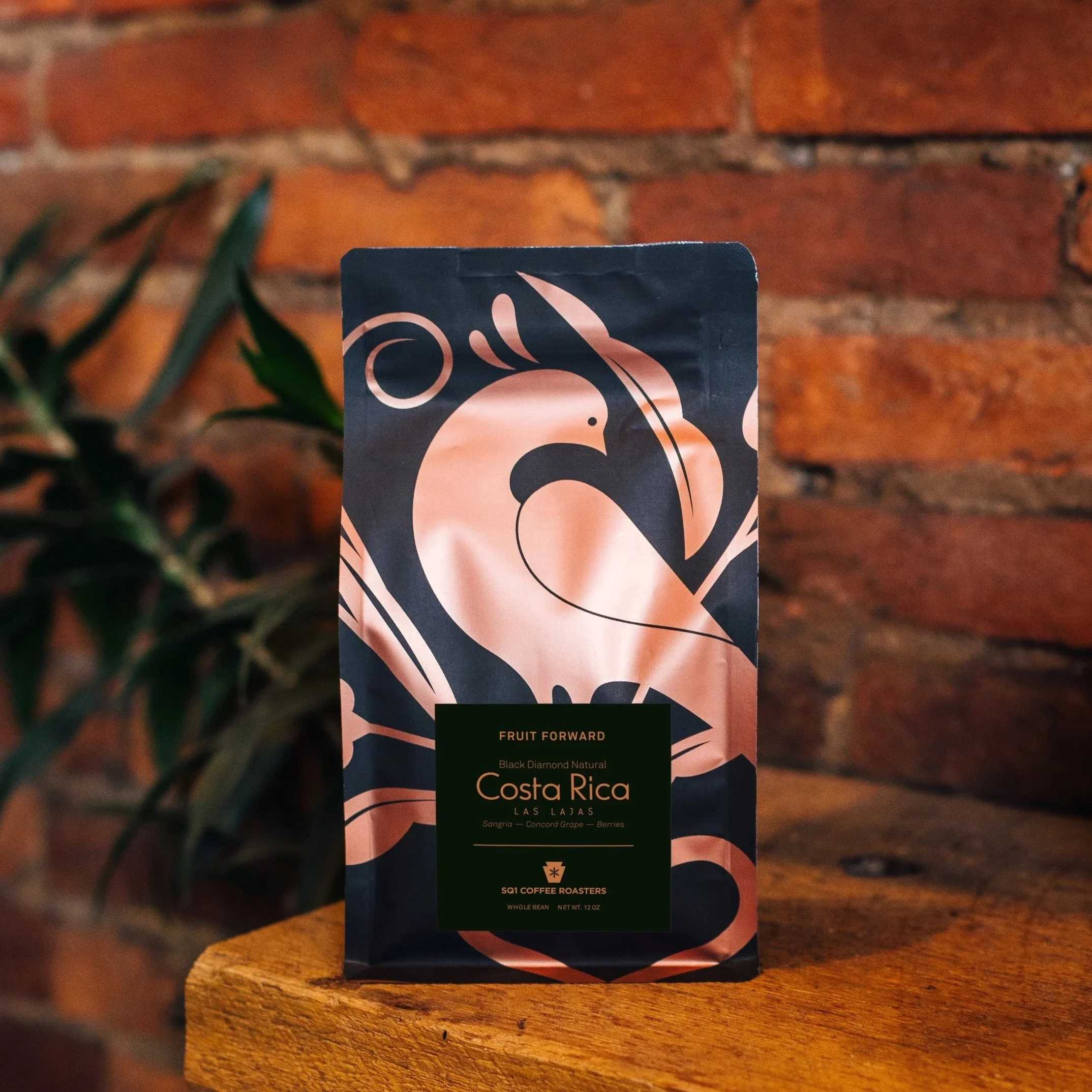
We taste: sangria, concord grape, berries
Farm: Finca Finca La Julia owned by Oscar and Francisca Chacón
Region: Sabanilla de Alajuela, Central Valley
Processing Method: Black Diamond Natural Process
Elevation: 1,400-1,600 msl
Varieties: SL28 & SL34
Another staff and customer favorite! We're proud to offer this delicious coffee from third generation coffee producers Francisca and Oscar Chacon. We love working with Oscar and Francisca Chacón because they are committed to quality and innovation. They’re among the very first farmers in Costa Rica to produce Honey and Natural process specialty coffee. Coffee is more than just in their family heritage: It's in their hearts and souls.
In 2005, after years of delivering their cherry to a cooperative for the going market price, they decided to join the brand-new "micro-mill revolution" and buy their own depulper to have more control over the quality and the price they received for their lots. "At first, we didn't know what we were doing," Oscar explains. "We were just experimenting." That experimentation led to some of the most exciting new flavor profiles we have ever tasted. Now, the Chacons produce a wide range of Honey process coffees, modulating the drying time in order to create different effects in the cup.
Necessity bred more innovation for the family when an earthquake in 2008 wiped out electricity and water to their area during the harvest. Unable to run the depulpers or to wash the mucilage off to produce Washed lots, Francisca took inspiration from her knowledge of African coffee production and quickly built raised beds on the property.
These days, Las Lajas focuses on several variations of both Honey and Natural processing. This natural “black diamond natural” coffee is grown and processed at the Las Lajas micro-mill in Costa Rica. Our team had the privilege of meeting Francisca when she visited us in Lancaster a few years ago. (Thanks to Cafe Imports for making that happen!)
What makes this black diamond process different from all the rest is the intentional curing process. It’s still a Natural process, but the drying period takes between 15 to 22 days. The process is very similar to their other Natural processes, beginning with the rigorous harvesting standards, sorting, and drying for one day on raised beds. Then the beans are moved from the raised beds to the drying patio.
The drying process takes more attention than the rest of their Naturals. Since it’s a slow drying process, they need to constantly check on the temperature and movement of the beans so they don’t get heated. What they’re aiming for with this process is slow dehydration, slower than usual, not allowing the temperature to rise abruptly, and everything under control measures. Oscar explained that the concept comes from the process of drying coffee seeds for nursery, slowly drying them without compromising the embryo; a passive drying process.
With this process, they don’t want to harm the beans with high temperatures but rather allow the sugars of the mucilage to cold crystalize. The goal of the Diamond process is to obtain sweeter, brighter coffees with more clarity.
TL;DR: This coffee was tended with extremely meticulous care!
When brewed, this coffee is winey and sweet with notes of Concord grape, blueberry candy, and raspberries. As it cools, hints of florals emerge and the coffee continues to sweeten, becoming a delicious berry sangria.
For more info on Las Lajas, check out this video.
RECOMMENDED RECIPE via the SIMPLIFY Brewer:
15g finely ground coffee
230g hot water
Set a paper filter in SIMPLIFY the Brewer and rinse the filter (or not if you are lazy).
Pour water at the center of 15g fine ground coffee. (No circular motion!)
Pour 230g of water for 30 seconds.
Wait for 60 to 90 seconds until all the water drips from the brewer.
Serve and enjoy!